Ecommerce SEO — where online shops quietly lose
Most shops don't lose traffic to a competitor's clever content. They lose it to their
own plumbing. The faults I find over and over, on sites that look perfectly healthy:
Category pages treated as filing cabinets
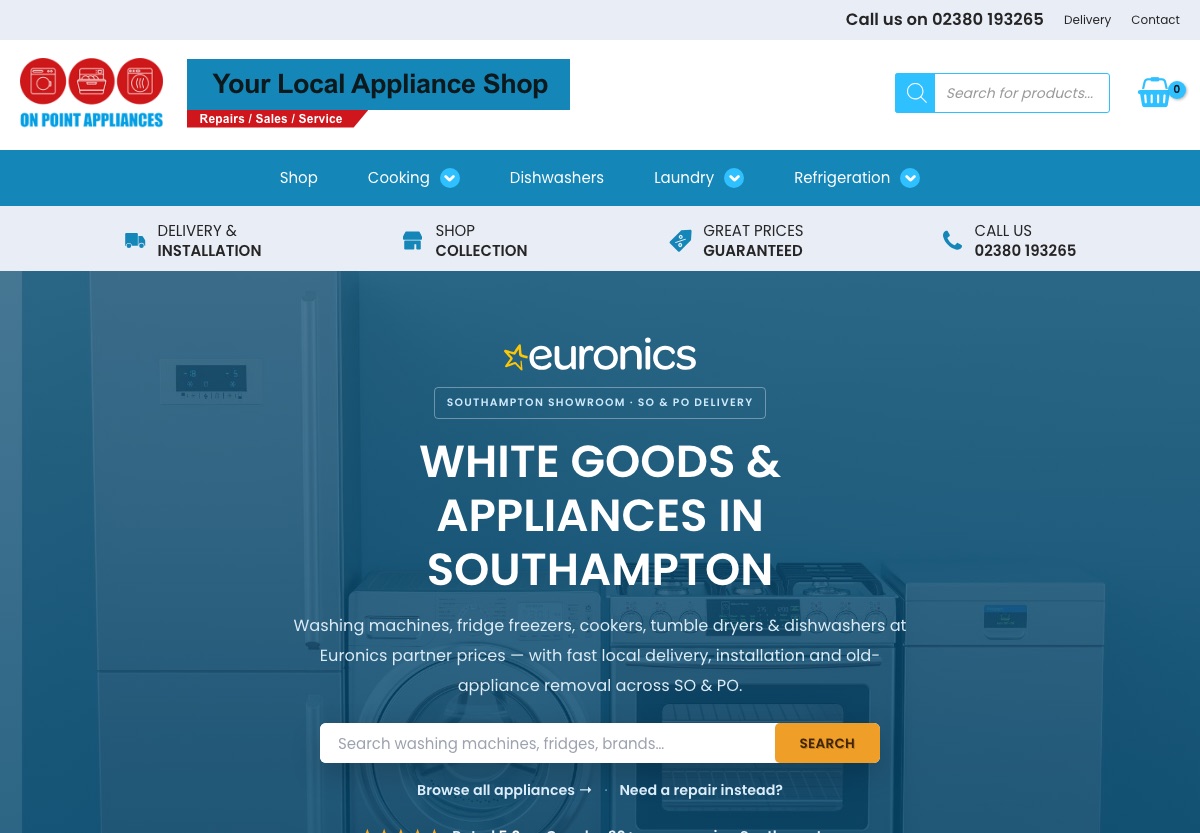
Your category pages are the money pages. "Washing machines
Southampton" is a category-page search, not a product-page one — but on most
shops the category page is a bare grid with a two-word heading and nothing for Google
to read. Written intros above the grid and supporting content below it, page one only,
is one of the highest-return jobs in ecommerce SEO.
Sitemaps that leave out the pages that sell
On one live shop the entire product-category sitemap was switched off in the SEO
plugin's settings. Twenty-one commercial category pages, all indexable, all good, none
ever submitted. Nobody knew until it was checked. Sitemaps get verified on every build
I do, not assumed.
Thin pages breeding in the background
Attribute archives, empty categories, filtered URLs and tag pages multiply on their own
and dilute everything around them. They want auditing and, usually, marking as noindex
— while making sure the filters your customers actually use stay crawlable in the
ways that help.
Duplicate product descriptions
If forty products share the manufacturer's paragraph, none of them can rank on it. That's
a content job, product by product, and it's slow — but it's the difference between
a catalogue and a shop that gets found.
Proof that never loads
Logan Carpets had a genuine 5.0 Google rating sitting inside a review widget that never
hydrated, so every visitor saw an empty space where the social proof should have been.
Trust signals belong in the page itself, always visible, never dependent on somebody
else's JavaScript.